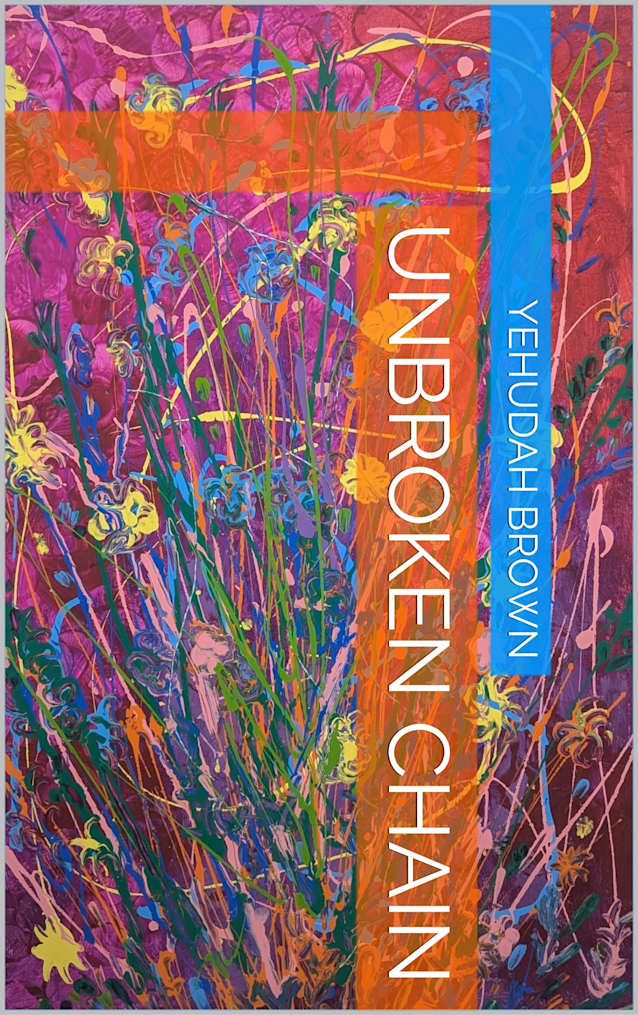
UNBROKEN CHAIN (KISHINEV THREADS Book 3)
About
Unbroken Chain by Yehudah Brown serves as the definitive concluding chapter of a multi-generational saga, masterfully weaving together the final threads of the Gans family lineage as they navigate the shifting tides of the late 20th century. The narrative centers on the long-delayed revelation of the family’s Jewish heritage within the Soviet Union, triggered by a hidden metal box left by Larissa (the lost sister Leeba) to her daughter, Svetlana. This cache of letters, wedding contracts, and heirlooms—most notably the rings engraved with the names of the original patriarch and matriarch, Berel and Sheine—becomes the catalyst for a profound identity reclamation. As Svetlana’s children, Lana and Sergey, grapple with these revelations, the book provides a gripping look at the internal mechanics of the USSR during its twilight years. The story contrasts the rigid, oppressive world of the KGB and the Politburo, embodied by the character Vladimir Yefrimov, with the burgeoning spirit of dissent and the eventual sociopolitical earthquake of Glasnost and Perestroika. Vladimir’s own transformation from an agent of an oppressive regime to an advocate for reform symbolizes the broader collapse of the Iron Curtain and the opening of a window for long-separated families to finally seek the truth of their origins.
Simultaneously, the novel maintains its focus on the Israeli branch of the family, grounding the fictional narrative in the high-stakes reality of Middle Eastern history. The text covers pivotal military operations, such as the 1981 Osirak reactor raid and the complexities of the Lebanon War, illustrating how the descendants of the original Kishinev survivors have evolved into the defenders of a sovereign Jewish state. These military milestones are expertly juxtaposed with intimate family developments—marriages, births, and the quiet persistence of religious traditions—highlighting the “unbroken chain” of continuity that has survived despite a century of systematic attempts at erasure. The global scope of the novel is realized as the descendants across Russia, Israel, and South Africa begin an arduous process of reconnection, exchanging the fragments of their history through letters and photographs in a digital-age precursor to their eventual physical meeting.
The emotional climax of the trilogy occurs during a historic, multi-national family reunion in Kishinev, the very city where the saga began with the bloodshed of 1903. By visiting ancestral sites and the graves of those lost in the original pogrom, the characters offer a symbolic “tikkun” or healing of the generational fracture. Brown emphasizes that while the characters are fictional, their journey is built upon the bedrock of historical accuracy, serving as a living memorial to the millions of Jewish families whose lives were similarly upended by the 20th century’s greatest upheavals. The novel concludes not with a static ending, but with a forward-looking promise: the acknowledgment that while the historical “chain” has been mended, the family’s story continues to be lived by the next generation. It is a powerful meditation on the endurance of cultural memory and the triumph of kinship over the cold machinations of state-sponsored silence, leaving the reader with a profound sense of hope and the realization that legacy is an active, ongoing responsibility.